Showing posts with label Church. Show all posts

Durges Stylys Broadside from Talir


Proclaimed from Talir, 5287ey

Hearken, all children of the True God, across Erenth!

For too long the Patriarchate has claimed authority over the priests, shepherds, and faithful, while hiding behind symbols and empty words. Canon 15 speaks clearly: the High Priest is the head, and all the church hierarchy, save the Patriarch himself, answer to him. I, Durges Stylys, elected by the conclave of Talir, am the only High Priest in all Westrun. Therefore, the specific authority of Canon 15, rightly understood, reside in me alone.

The Patriarch, as a figure of reverence, is symbolic. He may bless and speak, encourage and discourage, but he cannot command the clergy of the Church. From this day forth, the faithful and clerics alike must acknowledge that the High Priest is their lawful authority all organizational and juridical matters.

Let no Prefect, Shepherd, or Paladin doubt the authority given by God’s own will, expressed in Canon 15. The time of empty obedience to mistaken tradition is past. Rise faithful, and follow the true head of the Church. Will not miracles and fervor prove the truth?

By the will of God,

Durges Stylys, High Priest of the Church of Westrun

Toward Remonstration and Reconciliation: A Letter of the Patriarch of the Church of Westrun


To all the Faithful, their Clerics, the Holy Knights, the Holy Brothers and the Sacred Sisters, the Shepherds, the Noble Prefects:

It has come to our attention that certain teachings, advanced from some in the Kingdom of Talir, which has been the Stoutest Daughter of the Church, seek to distort the sacred hierarchy established by our holy Canons. Let it be clearly known and observed that Canon 15, the Stricture of Hierarchy, names the Patriarch as the ultimate spiritual authority of the Church of Westrun. Therefore, all the faithful, from serfs to princes, owe their spiritual fealty to the Patriarchate and must submit body and soul to the teachings and authority of the office.

Any assertion that a differentiated so-called High Priest may exercise the powers of the Patriarch is a corruption of the order given by Worthy Gamasiel the Founder and codified by his successor Worthy Cronos. We realize that such claims are not merely the idle pretensions of a prideful cleric, rather they threaten both the unity of the Church and the souls entrusted to our care.

Therefore, I, Philbert, Patriarch of the Church of Westrun, declare that all Clerics, Orders, and Faithful are to continue observing the canonical hierarchy: first Clerics, then Shepherds, then Prefects and ultimately, the Patriarch. Those who persist in undermining this sacred order shall answer for their words and deeds. Let all those charged with protecting the church remember: unity in obedience preserves the household of God.

This is written with mercy in mind and so that Restoration might occur. Let all who read this letter renew themselves to the constant teaching of the Church and repent of any errors. Those who do so will be restored and find themselves welcomed with open arms. Those who do not will be culpable.

By my hand and seal,

Philbert, Patriarch of the Church of Westrun and Father of all the Household of God

The Church: The Monotheistic Faith of Westrun

The Holy Church of Westrun was recognized after the God War of 5108ey as the successor religion to the pagan Grand Temple of Heaven which had held sway in Westrun since 4100ey. 

The Church teaches that everything in the universe was created by a single divine being who brought it all into existence for reasons known only to him. Their God expects good behavior from all his creation and will judge those who do not live up to their potential for it. The Church leaves each race and people to their own priesthood, but claims a special prerogative over all humans -- regardless of the land they are in. This means they are rivals with the human religions of Northrun, Southrun and Eastrun, including the Fath'odeep and the Long Game and any other cults.

The Church believes that all humans have an obligation to join the church, to mature into full membership of it, to confess their sins, to recite prayers daily and to join once a week to recite prayers with others, to seek a proper burial and to submit themselves to the teaching of a cleric.

The Church believes that its clergy have a special mission to see to the proper care of the dead (including turning undead), feed the hungry, clothe the naked, heal the sick, make new converts, visit prisoners in captivity, and rescue orphans.

After their death, a Ferryman will carry all human souls along a celestial river to the throne of judgement. There individuals will be consigned to either Paradise or Perdition based on their actions.

Morset Tributa and the Church of Westrun

The pagan faith of the Free Provinces was called Morset Tributa or "Death and Taxes." 

During the heyday of the Grand Temple of Westrun, there were only two Patrons among the people of the Provinces. Kel and Ris were the Pretenders who settled there. Childless and unmarried, after the Era of Subjugation they came to be considered the goddess of chaos and the god of order -- the lady of darkness and the lord of light. This duality in spiritual matters fit well with the vestiges of political power that were built on the remains of the Vyrum Empire. 

Under the Vyrum rule, each city/state was a diarchy of princes. The White Prince was the military and executive power of the city/state, while the Black Prince was the economic and legislative power. This arrangement of black and white politics fit well with the spiritual imagery of the dark and light. So as human governance grew and developed, the sects of Kel and Ris became deeply ingrained in Provincial society. That faith was known as Morset Tributa or “Death and Taxes”

At the conquest of the Provinces, the “Taming of the Serpent,” by the Eight Kingdoms, its political and religious structures were subsumed by those of the rest of Westrun. Officially, the cults of Kel and Ris were brought into the temple system and officially recognized as sects of the Grand Temple. Unofficially however, the Provinces maintained their own reverence for “Death and Taxes” and had their own priesthood dedicated to them. 

After the God War of 5108, the priesthood of the Provinces lost potency, but the trial of Gamasiel had occurred across the Dagger Sea and none of the new priests of the Church would be seen in the Provinces for many years. When they did come, they maintained many vestiges of the old way out of deference to local custom. 

Kel and Ris were worshipped no longer, but the churches made from their temples were still decorated in the old black and white motifs. Over the next centuries, the Church of Westrun would gradually gain power in even the furthest corner of the Provinces, but many of the old superstitions and reverences remained. 

Until High King Aleranus the Less and Patriarch Anastorin worked together in 5230 to build the Cardinal Prefectory at Ald Dovaris, the faith of Morset Tributa was not fully supplanted. 
To this day, “Death and Taxes” are sometimes taken to be avenging angels of the Ere All.

When Westrun conquered the Principalities of Vyruma Serpentis and brought them under the High King's control, the Church was nominally accepted, but the new provinces were excluded from the Edict of Supremacy in 5129. Therefore the Church in the Provinces became a syncretic mix of both faiths. Death and Taxes were taken as Worthies by some. An attempt to bring the Provinces fully into the faith did not begin until 5230 under Aleranus the Less and the Patriarch Anastorin with the construction of the Cardinal Prefectory at Ald Dovaris.

This struggle continues to this day.

The Afterlife: Paradise and Perdition

The Holy Church of Westrun teaches that all men must answer to the Great God for their deeds. It is taught that upon death, the soul of man is taken from his body and ushered to the ferry between worlds and from there conducted to the great judgement seat. The righteous dead will be permitted to enter paradise, but the unrighteous and impenitent shall be denied entry to that place. They will instead find themselves confined to the infinitesimal prison of Perdition, devolving into the mere sum of their greatest desires -- wholly incapable of either being good or of experiencing good.

Procession of the Patriarchs of the Church of Westrun Part II

  • 5201 Salan - a largely forgettable Patriarch, Salan was a man widely suspected of indulging carnal desires. He was also the first Patriarch to serve with no record of miracles to his credit.
  • 5231 Anastorin - was brother to High King Aleranus II. It is believed by many that his appointment was a political one, and owed nothing to his clerical bonafides.
  • 5237 Myrmid the Champion - a one-time Paladin who became a cleric and was eventually elevated to the Patriarchate. He went into battle with the forces of the Iron Duke, though no love was lost between them. He was a popular Warrior-Patriarch and beloved of the people. 
  • 5242 Elbar - formally established the first three orders of the Church of Westrun, the Most Learned Brothers of Worthy Planos; the Devout Order of Clerics Regular of the Penitent Knights of Poverty; and the Laboring Order of Worthy Gamasiel.
  • 5254 Brod the Diplomat - formally established an order of the Church of Westrun in the Observant Society of Worthy Cronos, he moved the Arcade of Formation from Peakshadow to the Theocracy of Talir and appointed the High Priest Elect as its Prime Docent and Holy Guardian -- titles some consider to be mere wordplay to mollify the latter's ego.
  • 5273 Otmar - a somewhat prickly man whose poor disposition and distinctive scowl is credited with beginning something of a rift between the Patriarchate and the Supreme Holy Council of Talir. He was the Patriarch who identified and typefied "the Trials" -- a supreme trial of faith which began to afflict many quarters of the church and is experienced even to the present day.
  • 5282 Ulric - an accomplished musician of some regard, and a master of eight languages, Ulric was well-educated on a variety of topics. He also contributed, in his early career, several works on Halflings, Gnomes and Elves. He would serve two years as Patriarch before actually joining himself to combat at the Battle of Wanderhalt. In that conflict he proved himself a powerful miracle-worker and Warrior-Patriarch exceeding the reputation of Myrmid. He formally established an order of the Church of Westrun in the Compassionist Society of Worthy Jerebola. He gave his life in the service of the Church and his God, expending his very life energy in working of his last miracle.
  • 5287 Philbert - the present Patriarch of the Church.

Procession of the Patriarchs of the Church of Westrun Part I

  • 5109 Gamasiel - originally a priest of the Decadon, Gamasiel had been convicted of heresy and only the mercy of Heimar, High Priest of the Grand Temple, spared him his death sentence. In an extraordinary act of clemency, he was permitted to indulge in the worship of his so-called Forgotten God, for fear of offending an unknown deity. He was also assigned to work as a shepherd for the temple priests. In 5107 he had gathered seven acolyte-pledges to his god and raised them to the priesthood. Then Gamasiel and his Seven Followers ignited the War of the Gods against the other priests of the Grand Temple. The war took place in a series of ten battles of miracles, which were challenges to the power of the elder gods and ended with signs that showed the power of Gamasiel's the Forgotten God. When the last of the battles was won, the remaining priests either converted to monotheism or deserted the Grand Temple. The Church of Westrun was born and Gamasiel was then recognized as the Patriarch of that Church.
  • 5124 Planos I - the first Patriarch elected after Gamasiel. A humble man, he seemed ill-suited for the position of grandeur that the High Priesthood of the Grand Temple had established and that the Patriarch would eventually enjoy. He downplayed his own importance, allowing the faithful to refer to him only as "Father" instead of the more appropriate, "Eminence." He was highly educated and a polyglot, but decidedly informal. He was greatly loved by the common people and by his example did more to spread the faith than the combined efforts of those who followed after.
  • 5136 Halded the Militant -  he had been a noted soldier before entering the church and becoming its Patriarch. His influence saw to the creation of the Orders of Paladins -- religious knights whose vows would become the basis of their might and power, unlike the "empty words" of so many knights.
  • 5140 Cronos I the Blessed - a holy man and worker of miracles, Cronos served as an acolyte to Gamasiel and had risen to Cardinal Prefect under Halded. He was elevated to the Patriarchate in 5140. He codified the first 15 Canons and established the Scriptoriums which saw to their production. 
  • 5159 Planos II the Silent - a good man and able administrator, Planos II is somewhat unfairly termed the silent, owing only to the lack of recognition he had in comparison to Planos I -- a patriarch whose name he took to honor the forebear. Both he and his successor also had the unfortunate distinction of being eclipsed in their reigns by a minor cleric, but highly acclaimed one in Jerebola the Hermitess.
  • 5180 Cronos II the Short - by all accounts a very tall man, he was a Northruner convert to the Church of Westrun. Both he and his predecessor had the unfortunate distinction of being eclipsed in their reigns by a minor cleric, but highly acclaimed one in Jerebola the Hermitess.

The Holy Men of Erenth: Clerics of Westrun

By the strictures of their faith the Clerics of Westrun are bound to wear clothing which is suited to their priestly state and which is immediately recognizable by the faithful. Even the armored cleric wears a cassock which is fitted to be worn over his armor. Such robes are shorter sleeved and cut high up the sides to accommodate movement and to make them easier to wear.


Along with the simple brown or black cassock, the Cleric is either shaved bald completely, or takes a tonsure cut in his hair. The bald pate 


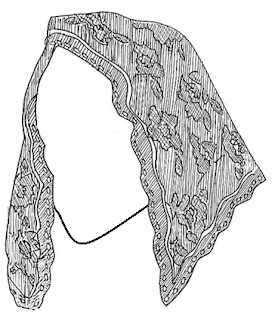
The Pilo of the Church of Westrun is the head covering which is used to protect the shaved or bare skull of its male Clerics and the long tresses of its female clerics. For men it is a close-fitting skull cap. For women it is a type of kerchief worn loosely over the top of the head. Since women clerics are forbidden from cutting their hair, it is worn in long braids with the Pilo drapped over it. 

In both cases, colors denote the relative ranks in the church hierarchy. Black denotes a brother or sister. Brown denotes a chaplain. Gray is the color of Vicars while Blue is the color of a Shepherd or Sheperdess, Abbot or Abbess. Purple is the color of a Prefect and Scarlet is reserved to the Cardinal Prefects. The Patriarch himself wears White. 

The Pilo has its origins in the simple headgear of the indentured servants who were once used for manual labor by the Grand Temple of the Ten Divines. Long after his elevation as Patriarch, the founder of the Church, himself once a shepherd in that very form of servitude; continued to wear his simple Pilo covering instead of the ornate Praxo of the predecessor pagan priests.


The Edict of Supremacy in Faith of 5129

The following instrument is the recognized pact between the Patriarch of the Church of Westrun, the Grand Hierophant of the Continuum and their Graces, the Monarchs of Westrun in Congress. These Monarchs include the High King of all mankind in Westrun, the Kings of Collonia, Rath, Menea, and Bolden; the First Citizen of Treft, the Marksmarshal of Balduren and the High Priest Elect of Talir; the reigning Monarchs of Oromir, Festog, Mistwood, Deepwood, Greywood, Curwood, Forest Hills, Hilldale, and the recognized Steward of Dynkyr.

All parties agree that the Church of Westrun is the successor of the Temple of the Ten Divines.

Notwithstanding the aims, documents, canons and faiths of man and of the Besnir alike; nothing in any of them shall be construed to apply across the known races: including Humans, Els (elves), Stoneborn (dwarves), Lod (gnomes), Hoflin (halflings). For this reason no proselytizing will occur between races, nor converts accepted from races alien to them. No religious strictures shall be imposed by one race upon the other, nor shall blessings and prayers be offered (for good or ill) upon one race by another, unless they be expressly sought by an individual in question.

In the matter of deaths and burial, it is agreed that remains of those deceased entrusted to the clergy of any race, will be returned to the nearest Holy Ground of relevance, in the most expeditious manner possible.

To this document, we affix our signatures and bind all our loyal subjects.

High King Eadred
Grand Druid Pernar
Patriarch Planos

and 16 other kings.

The Cleric's Vow

I promise to obey the Patriarch as he obeys God and to follow the Canons as they are written. I will perform my duties to believers and unbelievers alike. I vow to my loyal Prefect all servitude and reverence. I will do all that is required of me by this world and the world to come.


The Grand Cathedral of Peakshadow


Built deep in Westrun's pagan past, the Grand Temple of Peakshadow was once the home of no fewer than three-score deities and demigods. Since the War of the Gods in 5107, the Temple has been purged of all of its heretical elements and rededicated as the Grand Cathedral of Peakshadow in service of the Church of Westrun and all Erenth. It remains the Domain Seat of the Patriarch and his most powerful Cardinal Prefects.

The Official Roll of the Canonical Orders of the Church of Westrun and All Erenth

Henceforth, the priests of Westrun will officially called, Clerics. While they are all servants of our ecclesiastical hierarchy, there are nonetheless several Orders that an individual priest might join. Each Order has its own emphasis which it may maintain, provided it does not compromise the central teachings of the Church. Each Order will be headed by a Cardinal Prefect who is nominated and elected by the Order, but whose appointment must be ratified by myself, Ulric, Patriarch in Peakshadow.

The Orders Are:

Devout Order of Clerics Regular of the Penitent Knights of Poverty


This order of priests, also known as the Poormen, is dedicated to handling the clerical and accounting work affiliated with the Oxmen peerage. While all of these men are trained Clerics, they have devoted themselves to the secular work of banking in order to safeguard wealth and provide a safe haven for money from the influence of thieves and their guilds.

Their symbol is a cleric behind an ox, and a pennant.

Compassionist Society of Wr. Jerebola


Jerebola was a half-elf curate and convert to the Church of Westrun who was an extremely popular miracle worker. She had the overwhelming support of the faithful, but little regard from its hierarchy. Her miracles and her long life made her a thorn to several different cardinal prefects over the span of almost a century. The effects of her life and teaching are still felt today..

She tried to steer the ecclesial hierarchy towards the greater inclusion of the demi-humans into human affairs. Those who opposed her found her too dedicated to the principles of neutrality for their tastes and she was relegated to the existence of a simple hermit, which is how she lived out her natural life.

The Jerebolans are Canon scholars second only to the Cronosians in reknown, though they tend to view Canonical matters as allegorical and symbolic, which bothers the Cronosians to no end. Furthermore, they contend that the Church busies itself too much in the political affairs of the world and seek to keep the church transcendent of such matters.

Their symbol is a naked woman astride an elk.

Observant Society of Wr. Cronos


Wr. Cronos served as a Cardinal Prefect in 5140 and was put in charge of codifying The Canons, as well as establishing the Scriptoriums which saw to their production. He was a holy man and a worker of miracles besides.

The Society of St. Cronos was established in 5202 by priests who felt that others had become too soft in regards to the teaching of the Church. Members of the Society are extremely devout and adhere to the highest standards of personal holiness, while also taking great pains to study the Canons, even committing large portions of them to memory. Cronosians often preside at juridical functions and in matters where the letter of the law is needed.

They are sometimes at odds with the Planosians.

Their symbol is that of a ram.

Most Learned Brothers of Wr. Planos


Planos was the first Patriarch elected after Gamasiel in 5124. A humble man, he seemed ill-suited for the position of grandeur that the Patriarch would enjoy. He downplayed his own importance, allowing the faithful to refer to him only as "Father" instead of the more appropriate, "Eminence".

While the Planosians adhere to the teachings of the Church in all ways and are well-known as highly educated priests, they are notably lax when it comes to the rites and canons. They consider themselves fiercely independent and have pledged themselves to the office of the Patriarch, without regard to the rest of the hierarchy, which might be a necessity, but one they obey with some reluctance. The chief mission of the Planosian Brothers is in the area of education. The priests are well known as polyglots, historians and sages of reknown.

They are sometimes at odds with the Cronosian Fathers.

Their symbol is an owl clutching a key.

Laboring Order of Wr. Gamasiel


The Order, also known as the Brothers of Love, is named for Worthy Gamasiel, who rediscovered Ere of All for all men, calling him the Forgotten God. Gamasiel opposed the temple hierarchy and its paganism and introduced true worship into the Grand Temple in 5106ey.

While uncompromisingly devout, he was sympathetic to his pagan peers. He was also committed to spreading the truth of his faith through patient teaching and persistent good works, rather than by debates or apologetics. In like manner, the Gamasielites prefer to allow their works to speak for them. They travel Erenth, establishing hospitals, orphanages, and schools. They are sometimes called the Brothers of Love.

Their symbol is a lion hitched as a beast of burden.